Unit 1: Foundations of Longevity Coaching
Chapter 1.2: The Biology of Aging — What Coaches Need to Know
[CHONK: 1-minute summary]
What you'll learn in this chapter:
- The 3 biological "levers" coaches can actually pull to slow aging
- How mitochondria, inflammation, and cellular cleanup connect to what clients experience
- Why the fundamentals (exercise, nutrition, sleep) work so well. The biology behind the advice
- How to explain aging biology to clients in simple, practical terms
- What coaches can influence (and what we can't)
The big idea: Aging happens at the cellular level through multiple interconnected processes. But you don't need a PhD to help clients age better. This chapter focuses on the 3 biological systems coaches can actually influence, and how to translate that knowledge into practical coaching.
Introduction
Welcome to the biology of aging. (Don't worry. This isn't a biology textbook.)
Scientists have identified 12 biological processes that drive aging at the cellular level. They call them the "hallmarks of aging." You could spend weeks learning about genomic instability, epigenetic alterations, and deregulated nutrient sensing.
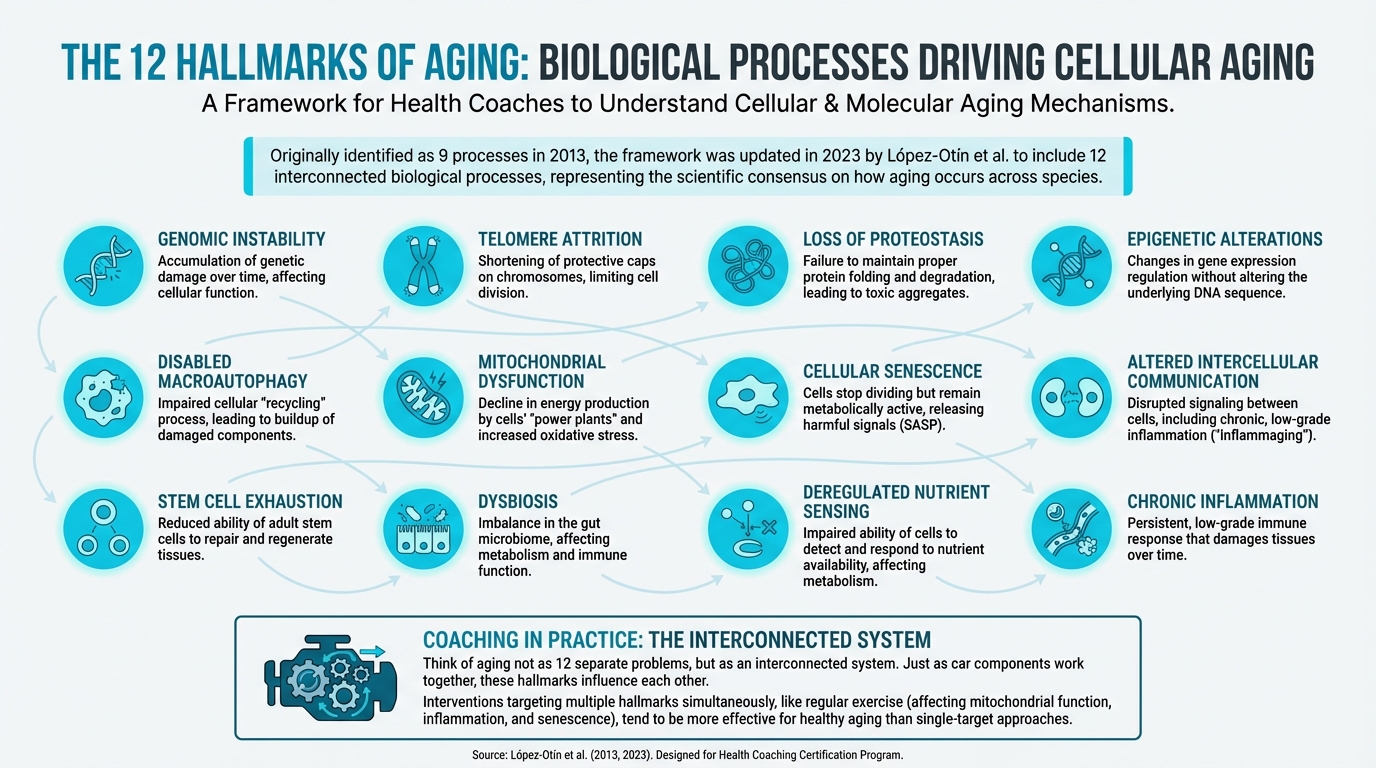
Figure: Visual showing all 12 hallmarks with icons
But here's what matters for coaching: you don't need to understand all 12 hallmarks to help clients age well.
What you need to understand are the 3 biological systems you can actually influence through lifestyle: the 3 "levers" you can help clients pull. Everything else flows from these.
In this chapter, we'll cover:
1. The 3 Big Levers: Mitochondria, Inflammation, and Cellular Cleanup
2. How These Connect. Why improving one improves everything
3. From Biology to Practice. Extensive coaching scenarios
By the end, you'll be able to explain aging biology to clients in plain English. You'll understand why the interventions work, not just what to recommend. And you'll have the confidence to answer the inevitable question: "But why does exercise help with aging?"
(If you want the full picture of all 12 hallmarks, see The 12 Hallmarks of Aging: Complete Guide. For the evolutionary perspective on why we age in the first place, see Why We Age: The Evolutionary Perspective.)
Let's dive in.
[CHONK: The 3 Big Levers Coaches Can Pull]
The 3 Big Levers Coaches Can Pull
Scientists have identified 12 hallmarks of aging. But for coaches, 3 of them matter most, because they're the ones we can directly influence through lifestyle, and they affect almost everything else.
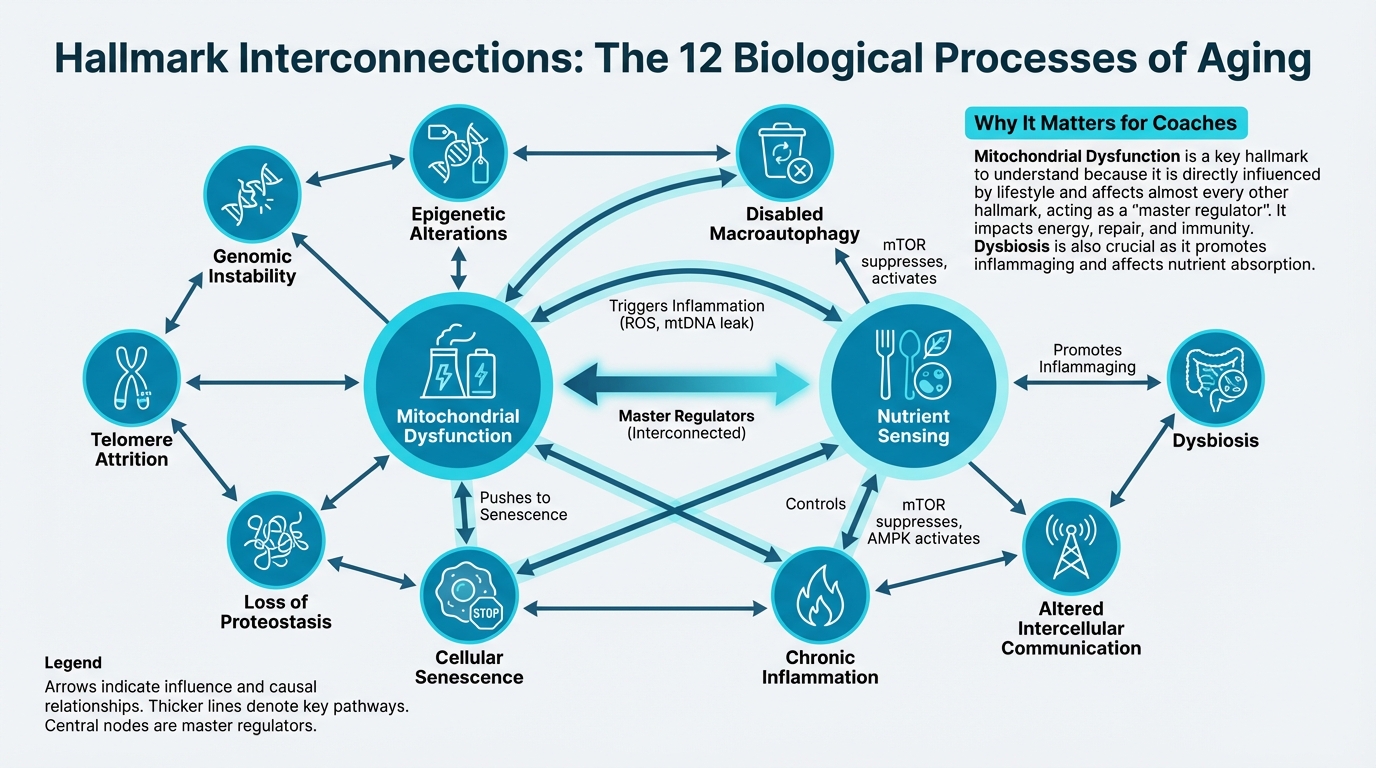
Figure: How hallmarks influence each other
Think of these as the "master regulators" of aging. Pull these levers, and you create a cascade of benefits throughout the body.
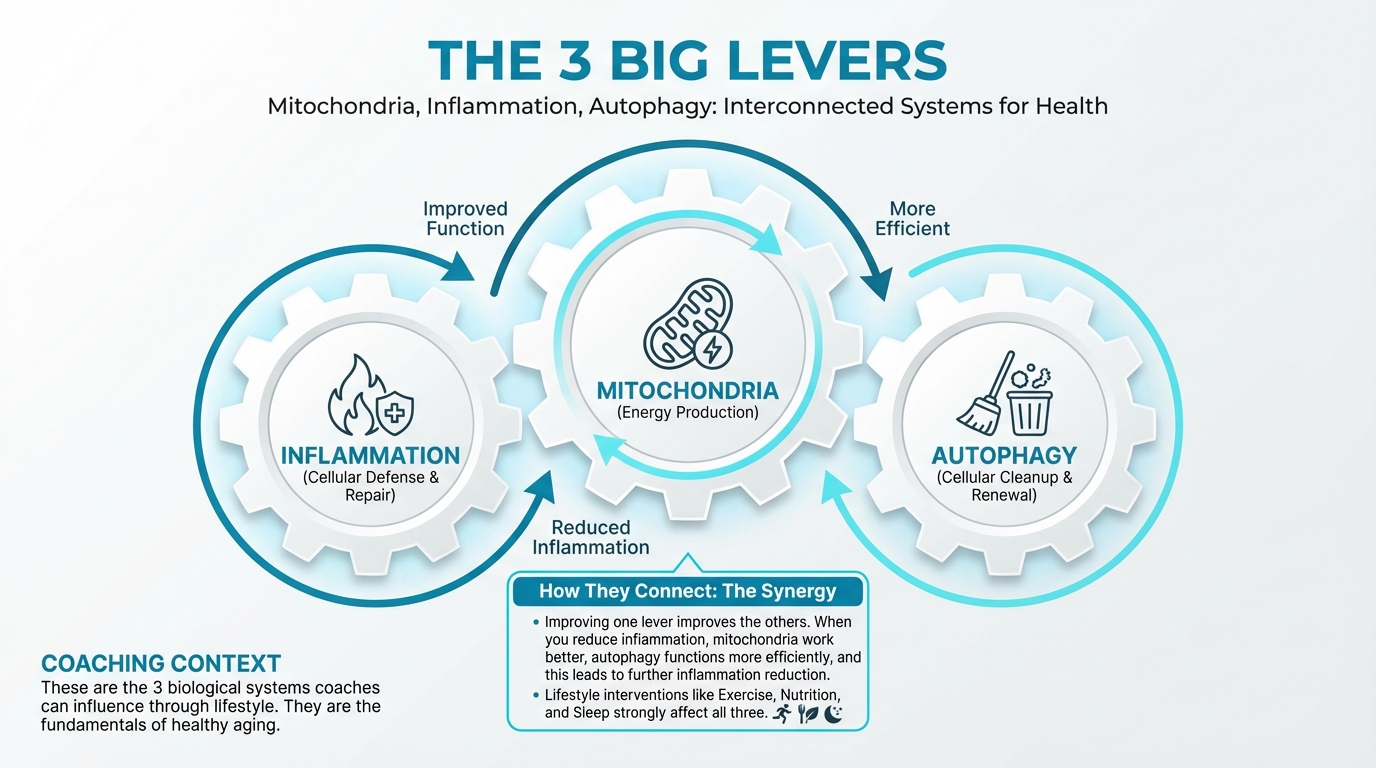
Figure: Mitochondria, Inflammation, Autophagy as interconnected gears/system
Lever 1: Mitochondrial Health (Energy Production)
What it is: Mitochondria are your cells' power plants. They take food and oxygen and turn them into energy (ATP), the fuel your cells use to do everything.
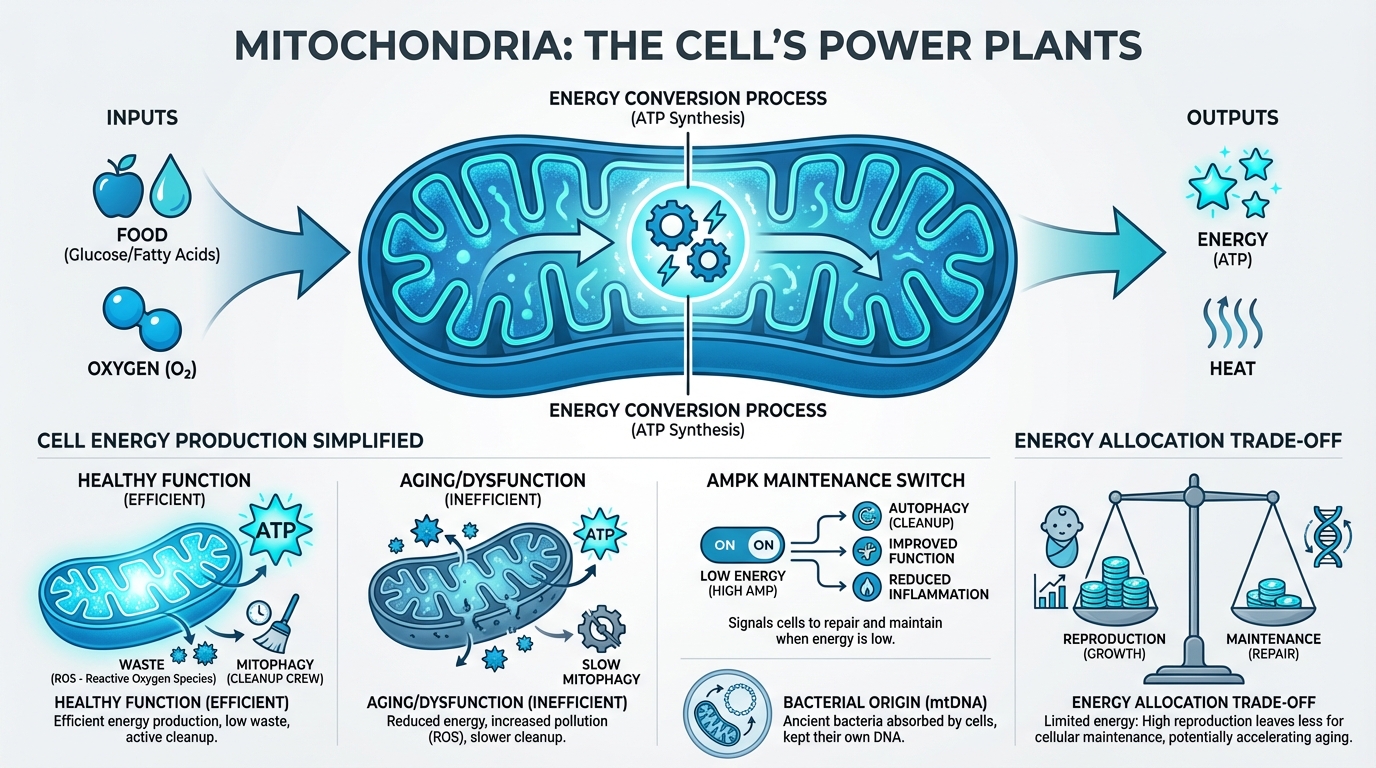
Figure: Cell energy production simplified
The simple explanation for clients:
"You have tiny power plants inside every cell. When they work well, you have energy, you recover quickly, and your body repairs itself efficiently. When they don't work well, you feel tired, foggy, and slow to recover."
Why It Matters for Longevity
As you age, mitochondria become less efficient. They produce less energy, and they start "leaking" harmful molecules that damage cells. This affects everything:
- Energy levels: Fewer functional mitochondria = less energy production = fatigue
- Recovery: Damaged mitochondria can't support repair and regeneration
- Brain function: Your brain is energy-hungry; it suffers when power plants fail
- Inflammation: Leaky mitochondria trigger inflammatory responses
- Other hallmarks: Mitochondrial dysfunction accelerates almost every other aging process
What Coaches Can Influence
This is the exciting part: mitochondrial health is highly modifiable through lifestyle.
Exercise is #1:
- Zone 2 cardio increases the number of mitochondria (more power plants)
- HIIT improves mitochondrial efficiency (better power plants)
- A 2024 meta-analysis found that endurance training increases mitochondrial content by ~23%, and HIIT by ~27%¹
Sleep matters:
- Your mitochondria have daily rhythms. They're more active during the day
- Poor sleep disrupts these rhythms and impairs mitochondrial function
- Good sleep supports mitochondrial repair and quality control
Nutrition helps:
- Mediterranean-style eating provides compounds that support mitochondrial function
- Time-restricted eating enhances "mitophagy" (recycling damaged mitochondria)
Client experience translation:
| Client says... | Mitochondrial connection |
|----------------|-------------------------|
| "I'm always tired" | Power plants not producing enough energy |
| "I can't recover from workouts" | Damaged mitochondria impairing repair |
| "My brain feels foggy" | Brain cells not getting enough energy |
| "I feel older than my age" | Overall mitochondrial decline |
Lever 2: Inflammation Control (Inflammaging)
What it is: With age, your body develops chronic, low-grade inflammation that isn't the helpful acute inflammation you get from an injury; instead, it's a persistent "background fire" that never fully goes out, a process scientists call "inflammaging."
The simple explanation for clients:
"Your body has a kind of alarm system that responds to threats. When you're young, it turns on when needed and turns off when the threat is gone. As you age, the alarm gets stuck. It's constantly buzzing at a low level. This creates wear and tear on everything."
Why It Matters for Longevity
Chronic inflammation is like a slow-burning fire in your body. It:
- Accelerates all other aging processes. Inflammaging makes everything worse
- Damages tissues. Constant inflammation wears down joints, blood vessels, and organs
- Disrupts healing. Your body can't repair properly when it's always fighting a fire
- Affects mood and cognition. Brain inflammation contributes to depression and cognitive decline
- Promotes disease. Heart disease, diabetes, cancer, and dementia are all linked to chronic inflammation
What Coaches Can Influence
The good news: Inflammaging is highly responsive to lifestyle.
Exercise is anti-inflammatory:
- Regular exercise reduces inflammatory markers
- It works through multiple mechanisms: Better mitochondria, less body fat, improved immune function
- Even modest activity helps
Mediterranean-style nutrition:
- Rich in anti-inflammatory compounds (omega-3s, polyphenols, fiber)
- Supports a healthy gut microbiome (which affects inflammation)
- Reduces pro-inflammatory foods (processed foods, excess sugar)
Stress management:
- Chronic stress promotes inflammation through cortisol and other pathways
- Meditation, breathwork, nature exposure, and social connection all reduce inflammatory markers
Sleep:
- Poor sleep increases inflammatory markers
- Good sleep gives your body time to resolve inflammation
Social connection:
- Loneliness and isolation promote inflammation
- Strong relationships reduce inflammatory markers
Client experience translation:
| Client says... | Inflammation connection |
|----------------|------------------------|
| "I ache all the time" | Chronic inflammation in joints and tissues |
| "I feel like I'm always fighting something" | Immune system constantly activated |
| "My mood is low" | Brain inflammation affecting neurotransmitters |
| "Everything takes longer to heal" | Inflammation disrupting repair processes |
| For DIY Learners |
|---|
| Applying this to yourself: Notice your own inflammation signals. Do you have persistent joint achiness that isn't from injury? Low mood that doesn't lift? Feeling like you're always "run down"? These could be signs of chronic inflammation. The same interventions you'll learn about in this course—better sleep, stress management, anti-inflammatory nutrition, regular movement—can help. Pick one area and start there. |
Lever 3: Cellular Cleanup (Autophagy)
What it is: Autophagy (literally "self-eating") is your cells' recycling system. It breaks down damaged parts—misfolded proteins, dysfunctional organelles, cellular junk—and recycles them into building blocks for new components. Think of it as cellular housekeeping.
The simple explanation for clients:
"Your cells have a built-in cleanup crew. They break down damaged parts and recycle them into new materials. When you're young, this happens efficiently. As you age, the cleanup crew slows down, and junk accumulates. This is like having a house where the garbage never gets taken out. Eventually, things get cluttered and stop working properly."
Why It Matters for Longevity
When autophagy slows down:
- Damaged proteins accumulate, associated with neurodegenerative diseases (Alzheimer's, Parkinson's)
- Dysfunctional organelles pile up, including damaged mitochondria
- "Zombie cells" (senescent cells) increase, cells that should die stick around, causing problems
- Repair capacity declines. Your body can't regenerate tissue as effectively
- All other hallmarks worsen. Autophagy touches almost everything
What Coaches Can Influence
Autophagy is highly responsive to lifestyle, especially eating patterns.
Time-restricted eating (TRE):
- When you don't eat for 12-16+ hours, autophagy ramps up
- Your cells shift from "growth mode" to "cleanup mode"
- A 2025 study found that 6 months of TRE increased autophagy markers²
Exercise:
- Exercise triggers autophagy, especially in muscle tissue
- It's one reason why exercise preserves muscle quality with age
Sleep:
- Your brain does a lot of "cleanup" during sleep (glymphatic system)
- Poor sleep means less time for cellular housekeeping
Caloric restriction:
- Eating less (without malnutrition) activates autophagy
- This is why caloric restriction extends lifespan in many species
Avoiding constant snacking:
- Every time you eat, especially protein and carbs, you signal "growth mode"
- Constant eating suppresses autophagy, so giving your body breaks between meals allows cleanup to happen
Client experience translation:
| Client says... | Autophagy connection |
|----------------|---------------------|
| "I feel sluggish" | Cellular cleanup slowing down |
| "My brain doesn't feel sharp" | Accumulated cellular debris in brain |
| "I don't recover like I used to" | Autophagy not clearing damaged components |
| "I feel like I'm aging faster than I should" | Cleanup systems declining |
[CHONK: How These Connect to Everything Else]
How These Connect to Everything Else
Here's the powerful insight: these 3 levers aren't independent. They create feedback loops.
When you improve mitochondrial health:
- → You produce less inflammatory molecules
- → You have more energy for autophagy
- → You reduce senescent cells
- → Which further improves mitochondrial health
When you reduce inflammation:
- → Mitochondria work better
- → Autophagy functions more efficiently
- → Stem cells can repair tissue
- → Which further reduces inflammation
When you enhance autophagy:
- → Damaged mitochondria get recycled
- → Inflammatory triggers get cleared
- → Senescent cells get removed
- → Which enhances more autophagy
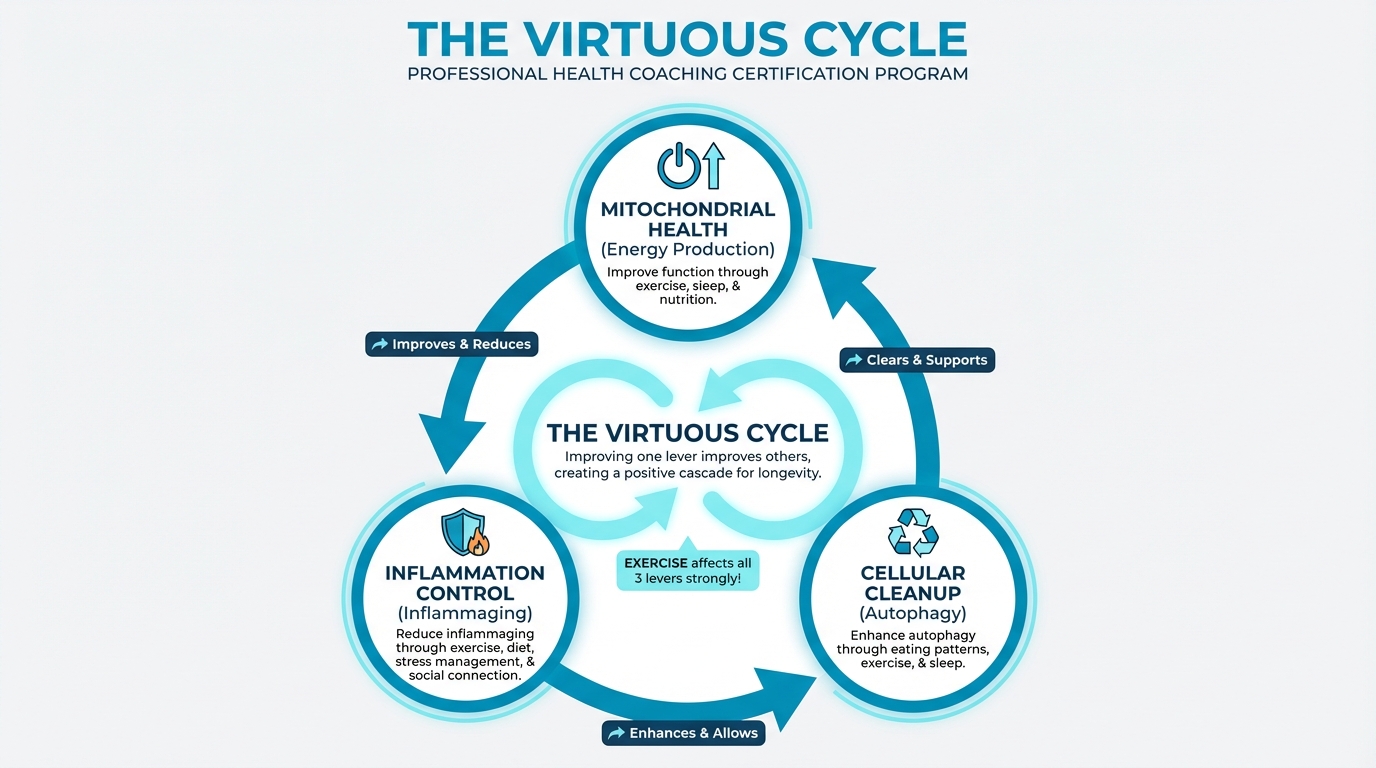
Figure: How improving one lever improves others (mito→inflammation→autophagy)
Why the Fundamentals Work So Well
This is why the "boring" advice—exercise, eat well, sleep, manage stress—is so powerful. It's not that these interventions do one thing. They pull multiple levers simultaneously:
| Intervention | Mitochondria | Inflammation | Autophagy |
|---|---|---|---|
| Exercise | ✅ Strong | ✅ Strong | ✅ Strong |
| Mediterranean diet | ✅ Moderate | ✅ Strong | ✅ Moderate |
| Good sleep | ✅ Moderate | ✅ Strong | ✅ Strong |
| Stress management | ✅ Moderate | ✅ Strong | ✅ Moderate |
| Time-restricted eating | ✅ Moderate | ✅ Moderate | ✅ Strong |
Exercise might be the ultimate longevity intervention because it strongly affects all 3 levers, plus many of the other hallmarks. When you help a client start exercising, you're not just improving their fitness. You're improving their mitochondria, reducing their inflammation, enhancing their autophagy, preserving their telomeres, supporting their stem cells, and more.
That's a lot of bang for your buck.
The "Big Rocks" Principle
This brings us back to the Big Rocks principle from Chapter 1.1: focus on high-impact, multi-lever interventions before worrying about exotic supplements or biohacks.
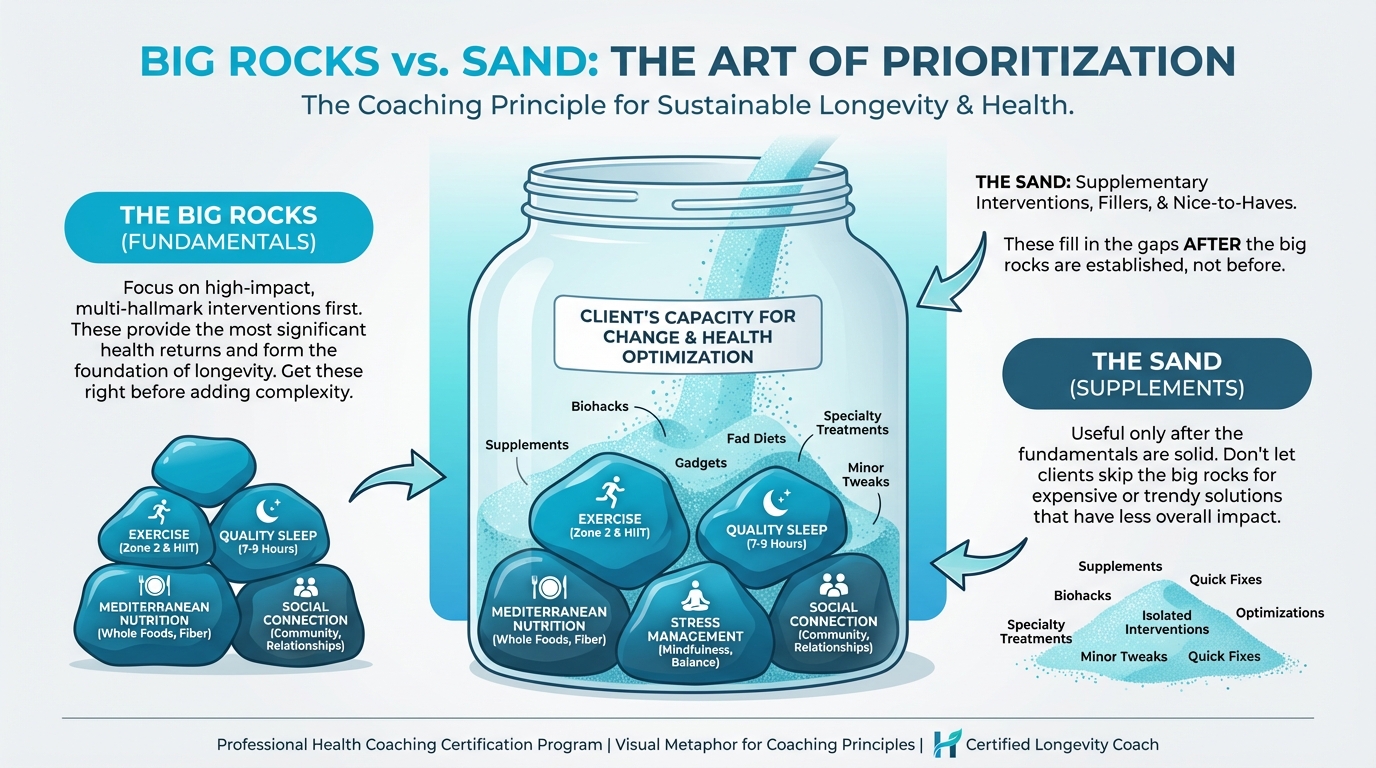
Figure: Jar with rocks/sand for prioritization
Big Rocks (hit multiple levers):
- Regular exercise (especially Zone 2 + some HIIT)
- Mediterranean-style nutrition
- 7-9 hours of quality sleep
- Stress management practices
- Social connection
Sand (may help but shouldn't come first):
- NAD+ precursors (NMN, NR)
- Rapamycin
- Senolytics
- Expensive biological age tests
- Cold plunges, saunas, etc.
The sand might have benefits. Some of it is promising. But if a client isn't exercising, sleeping well, or eating reasonably, adding supplements or biohacks won't move the needle much.
Get the big rocks in place first.
[CHONK: From Biology to Practice]
From Biology to Practice — What This Means for Your Coaching
Now let's translate this biology into practical coaching. This section covers the scenarios you'll actually encounter.
What Coaches CAN Influence
Here's the empowering truth: coaches can influence a lot.
You can help clients:
- Improve mitochondrial function through exercise, sleep, and nutrition
- Reduce inflammaging through exercise, diet, stress management, and social connection
- Enhance autophagy through eating patterns, exercise, and sleep
- Create the virtuous cycle where improvements in one area cascade to others
What Coaches CANNOT Do
It's equally important to know the limits:
- You can't reverse aging. You can slow it, optimize it, compress morbidity, but not stop it
- You can't guarantee outcomes. Genetics, environment, and history all matter; two people doing the same thing get different results
- You can't replace medical care. Some interventions require physician oversight
- You can't eliminate all risk. Even with perfect lifestyle, age-related diseases can occur
Being honest about limits builds trust and prevents overpromising.
Coaching in Practice: "Why Do We Age?"
The scenario: A curious client asks, "But why do we age in the first place? Couldn't evolution have made us live forever?"
What NOT to do:
❌ "Well, there's the disposable soma theory, antagonistic pleiotropy, and mutation accumulation..."
Why it doesn't work: You've lost them. They wanted a simple answer, not a lecture.
What TO do:
✅ Give the simple version, then offer more if they want it.
Sample dialogue:
Client: "Why do we age? Seems like a design flaw."
Coach: "Great question. The short answer: evolution prioritizes reproduction over long-term maintenance. Once your genes are passed to the next generation, there's less pressure to keep you alive forever. So your body invests in growing and reproducing rather than perfectly maintaining itself."
Client: "Huh. So aging isn't a mistake?"
Coach: "Exactly. It's a trade-off. But here's the good news: we can influence that trade-off. When you exercise, eat well, and sleep, you're essentially telling your body to invest more in maintenance and repair. You're shifting the balance toward longevity."
Client: "That actually makes sense."
Coach: "If you want to go deeper on the evolutionary stuff, there's a great section in the course materials. But the practical takeaway is this: the fundamentals work because they shift your body's priorities toward maintenance."
Key takeaway: Simple explanation first, depth available if wanted.
Coaching in Practice: "I'm Always Tired"
The scenario: A 48-year-old client complains of constant fatigue. "I'm tired all the time. Is this just aging?"
What NOT to do:
❌ "It could be your mitochondria, or inflammation, or poor autophagy, or senescent cells..."
Why it doesn't work: They wanted help, not a list of possibilities.
What TO do:
✅ Connect to one lever, offer a practical starting point.
Sample dialogue:
Coach: "Tell me more about the fatigue. When did it start? How's your sleep?"
Client: "It's been building for a couple years. Sleep is okay, I guess, six hours most nights."
Coach: "Okay. Here's one piece of the puzzle: you have these tiny power plants inside every cell called mitochondria. They produce your energy. As we age, they become less efficient. Fewer power plants, and the ones we have don't work as well."
Client: "So my power plants are wearing out?"
Coach: "Partly. But here's the good news: exercise is like upgrading your power plants. Zone 2 cardio, where you can still hold a conversation, builds more mitochondria. And the sleep piece matters too. Six hours might not be enough for your mitochondria to repair properly."
Client: "So what do you suggest?"
Coach: "Let's start with two things: add 20-30 minutes of Zone 2 cardio three times a week. Could be brisk walking, easy cycling, whatever you enjoy. And let's see if we can get you to 7 hours of sleep. Those two changes alone can make a real difference in how your power plants function."
Key takeaway: Connect to biology, keep it simple, give one actionable step.
Coaching in Practice: "Can I Reverse Aging?"
The scenario: A client has been reading longevity content online. "I want to reverse my biological age. Is that possible?"
What NOT to do:
❌ "Well, technically aging can't be reversed because it's a fundamental biological process governed by entropy and evolutionary trade-offs..."
Why it doesn't work: You've crushed their hope without offering an alternative.
What TO do:
✅ Validate the goal, reframe to something achievable.
Sample dialogue:
Client: "I've been reading about biological age reversal. Can we do that?"
Coach: "I love that you're thinking about this. Let me give you the honest picture. Can we literally reverse aging, like running the clock backward? The science says no, not yet, anyway. Aging is a fundamental biological process."
Client: "So all this stuff about reversing biological age is hype?"
Coach: "Some of it is. But here's what's real: we can absolutely slow down aging and optimize how you age. We can help you function like someone younger than your years. The goal isn't a younger number on a biological age test. It's feeling great, having energy, being strong, and staying healthy longer."
Client: "Okay, that makes sense."
Coach: "Think of it this way: instead of 'reversing' aging, we're 'compressing' the decline. Instead of spending 20 years at the end of life in poor health, maybe you spend 5. That's 15 more years of thriving. That's what we're going for."
Client: "I like that framing better, actually."
Coach: "Good. So let's focus on the things that actually work: exercise, nutrition, sleep, stress management. These aren't sexy, but they pull the levers that matter. What's one area where you feel like there's room to improve?"
Key takeaway: Be honest about limits, offer an empowering alternative.
Coaching in Practice: "Why Does Fasting Help?"
The scenario: A client has heard about intermittent fasting for longevity. "Everyone says fasting is good for aging. But why? What's actually happening?"
What NOT to do:
❌ "It activates AMPK and inhibits mTOR, which enhances autophagy and improves proteostasis..."
Why it doesn't work: Too much jargon. They'll nod and not understand.
What TO do:
✅ Use the cleanup analogy.
Sample dialogue:
Client: "I keep hearing fasting is good for longevity. What's the deal?"
Coach: "Great question. Here's the simple version: your cells have a cleanup crew. They break down damaged parts and recycle them. But this cleanup only really kicks in when you're not eating."
Client: "Why?"
Coach: "When you eat—especially protein and carbs—your body gets the signal: 'Growth mode! Build and store!' That's fine, you need that. But it suppresses the cleanup. When you don't eat for a while, your body shifts to: 'Okay, no food coming in. Let's clean house and recycle what we have.'"
Client: "So fasting triggers the cleanup?"
Coach: "Exactly. After about 12-16 hours without food, autophagy, that's the scientific name for cellular cleanup, really kicks in. Your cells start breaking down damaged proteins, recycling old organelles, clearing out junk."
Client: "Is that why people do 16:8 fasting?"
Coach: "That's the idea. You eat within an 8-hour window, fast for 16. You get your cleanup time without anything extreme. You don't need to do long fasts. Just giving your body a break from constant eating helps."
Client: "I snack all day. That's probably not great."
Coach: "It might be suppressing your cleanup systems, yeah. Want to try a simple version? Just stop eating after dinner and don't eat again until breakfast. That's 12 hours right there. See how you feel after a couple weeks."
Key takeaway: Simple analogy, practical application, easy first step.
Coaching in Practice: "What About Supplements?"
The scenario: A client wants to know about longevity supplements: NMN, resveratrol, etc. "Should I be taking any of these?"
What NOT to do:
❌ "NMN increases NAD+ levels which supports mitochondrial function and may activate sirtuins..." (launches into supplement lecture)
Why it doesn't work: You've skipped the fundamentals.
What TO do:
✅ Big Rocks first, then discuss supplements in context.
Sample dialogue:
Client: "What supplements should I take for longevity? I keep seeing stuff about NMN and resveratrol."
Coach: "Those are interesting, and we can talk about them. But first—honest question—how's your exercise, sleep, and nutrition right now?"
Client: "I mean... could be better. I exercise maybe once a week, sleep six hours, eat pretty randomly."
Coach: "Okay, here's my honest take: supplements are the sand, not the rocks. If you're not exercising regularly, sleeping well, and eating reasonably, adding NMN isn't going to move the needle much. The fundamentals are called fundamentals for a reason."
Client: "So supplements are a waste of money?"
Coach: "Not necessarily. But they're optimization on top of a solid foundation, not a replacement for it. Think of it like this: if your house has a leaky roof and broken windows, buying fancy furniture doesn't fix the house. Fix the structure first."
Client: "Makes sense."
Coach: "Once you've got the fundamentals dialed in: exercising 3-4 times a week, sleeping 7-8 hours, eating mostly whole foods. Then we can talk about whether supplements might help. Some of them have promise. But they're the 5% on top of the 95%, not the main event."
Key takeaway: Redirect to fundamentals, keep door open for future discussion.
Coaching in Practice: "How Do I Track Progress?"
The scenario: A data-oriented client wants to know how to measure whether the interventions are working. "How do I know if I'm actually slowing my aging?"
What NOT to do:
❌ "Well, you could get an epigenetic clock test, though the correlation with actual outcomes is still being studied..."
Why it doesn't work: They want practical guidance, not caveats.
What TO do:
✅ Focus on functional markers, with testing as optional extra.
Sample dialogue:
Client: "How do I track whether this is working? I like measuring things."
Coach: "Love it. There are two levels: functional markers, meaning how you actually feel and perform, and lab markers. Functional markers are honestly more important for most people.
Client: "What functional markers?"
Coach: "Energy levels: are you less tired? Recovery: do you bounce back faster from workouts? Strength: are you getting stronger or at least maintaining? Sleep quality: are you sleeping deeper? Mood: how's your overall wellbeing? These tell you if your mitochondria, inflammation, and cleanup systems are improving."
Client: "What about lab tests?"
Coach: "If you want data, a few things are useful. VO2 max—how efficiently you use oxygen—is a strong predictor of longevity and tracks mitochondrial health. You can get this tested or estimate it. Inflammatory markers like CRP can show if inflammation is improving. Standard blood panels for metabolic health. Your physician can order these."
Client: "What about those biological age tests?"
Coach: "They're interesting but not perfect. Different tests give different results. And the correlation with actual health outcomes is still being studied. I'd prioritize functional markers and standard labs. If you want to add an epigenetic clock test for curiosity, sure, but don't obsess over the number."
Client: "Got it. So focus on how I feel and perform."
Coach: "Exactly. Are you stronger? More energetic? Sleeping better? Recovering faster? That's what matters. The tests are just data to support what you're already experiencing."
Key takeaway: Functional markers first, tests as supplementary data.
[CHONK: Study Guide Questions]
Study Guide Questions
-
What are the "3 Big Levers" coaches can pull to influence aging biology? Briefly explain each.
-
How are mitochondria, inflammation, and autophagy interconnected? Give an example of a feedback loop.
-
Why do the fundamentals (exercise, nutrition, sleep) work so well for longevity? How does this relate to the 3 levers?
-
A client says "I'm always tired." How would you explain the mitochondrial connection in simple terms?
-
A client asks "Can I reverse aging?" How would you respond honestly while still being empowering?
-
Explain autophagy to a client using the "cleanup crew" analogy. Why does fasting enhance it?
-
What is the "Big Rocks vs. Sand" principle? Give examples of each category.
-
How would you help a client who wants to take longevity supplements but hasn't addressed the fundamentals?
-
What functional markers would you track to see if longevity interventions are working?
-
Why is exercise often called "the longevity drug"? How does it affect the 3 big levers?
Self-reflection questions:
-
Which of the 3 big levers (mitochondria, inflammation, cellular cleanup) do you think needs the most attention in your own life? What's one change you could make this week?
-
When you think about your current energy levels, recovery, and how you feel day-to-day—what does that tell you about your own mitochondrial health?
[CHONK: Works Cited]
Deep Dives
Want to go deeper? These supplemental articles explore key topics from this chapter in more detail.
- Why We Age, The Evolutionary Perspective. Disposable soma theory and why evolution "chose" aging
- The 12 Hallmarks of Aging. Complete Guide. All 12 hallmarks explained with interventions matrix
- Hallmark Deep Dive: Cellular Senescence. The "zombie cell" problem
- Hallmark Deep Dive: Epigenetic Alterations. Biological age clocks and what they mean
- Exercise & The Hallmarks of Aging. How exercise affects each hallmark
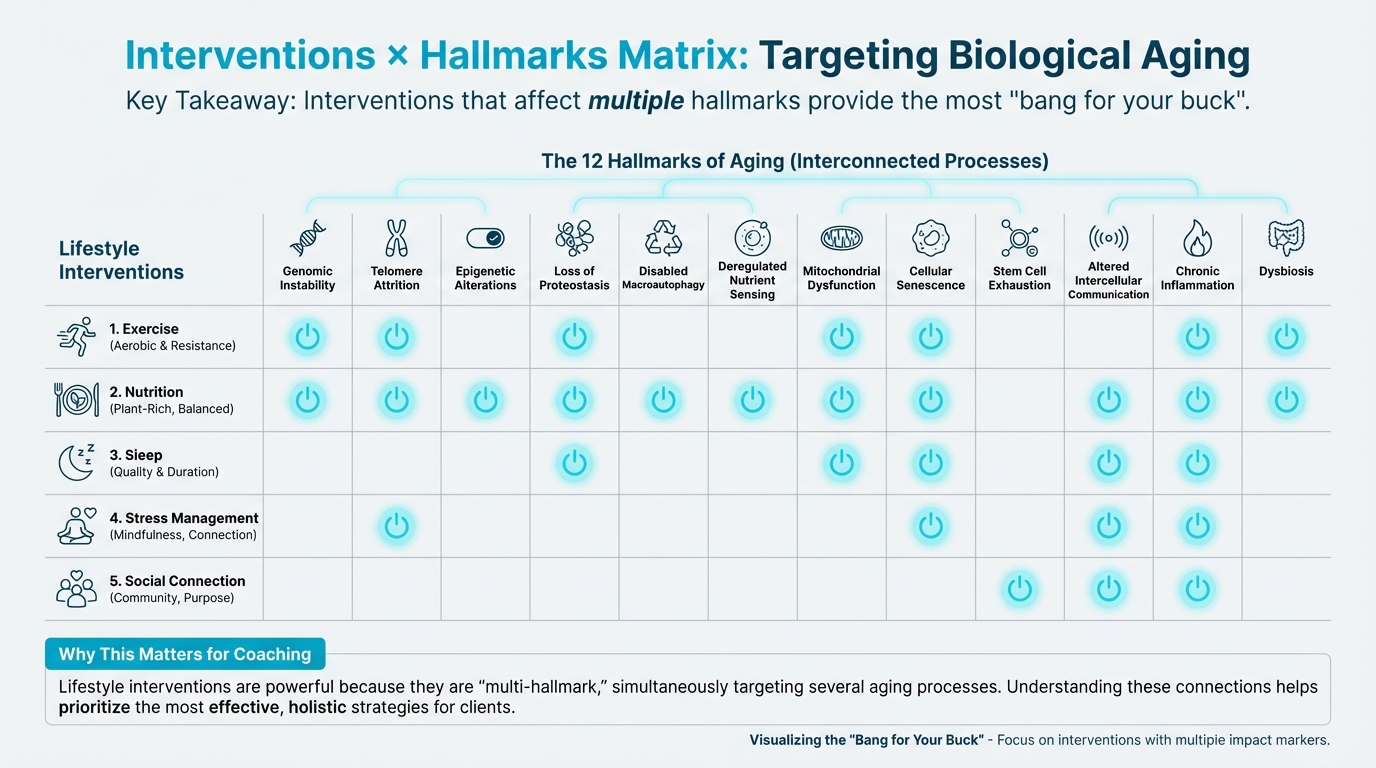
Figure: Which interventions affect which hallmarks
References
-
Mølmen KS, Almquist NW, Skattebo Ø. Effects of Exercise Training on Mitochondrial and Capillary Growth in Human Skeletal Muscle: A Systematic Review and Meta-Regression. Sports Medicine. 2024;55(1):115-144. doi:10.1007/s40279-024-02120-2
-
Bensalem J, Teong XT, Hattersley KJ, et al. Intermittent time‐restricted eating may increase autophagic flux in humans: an exploratory analysis. The Journal of Physiology. 2025;603(10):3019-3032. doi:10.1113/jp287938
-
López-Otín C, Blasco MA, Partridge L, Serrano M, Kroemer G. Hallmarks of aging: An expanding universe. Cell. 2023;186(2):243-278. doi:10.1016/j.cell.2022.11.001
-
Rebelo-Marques A, De Sousa Lages A, Andrade R, et al. Aging Hallmarks: The Benefits of Physical Exercise. Frontiers in Endocrinology. 2018;9. doi:10.3389/fendo.2018.00258
-
Englund DA, Sakamoto AE, Fritsche CM, et al. Exercise reduces circulating biomarkers of cellular senescence in humans. Aging Cell. 2021;20(7). doi:10.1111/acel.13415
-
Aversa Z, White TA, Heeren AA, et al. Calorie restriction reduces biomarkers of cellular senescence in humans. Aging Cell. 2023;23(2). doi:10.1111/acel.14038
-
Sun L, Zhang T, Luo L, et al. Exercise delays aging: evidence from telomeres and telomerase—a systematic review and meta-analysis of randomized controlled trials. Frontiers in Physiology. 2025;16. doi:10.3389/fphys.2025.1627292
-
Carroll JE, Cole SW, Seeman TE, et al. Partial sleep deprivation activates the DNA damage response (DDR) and the senescence-associated secretory phenotype (SASP) in aged adult humans. Brain, Behavior, and Immunity. 2016;51:223-229. doi:10.1016/j.bbi.2015.08.024
Chapter 1.2 complete. Proceed to Chapter 1.3: Deep Health and Longevity Mindset.